
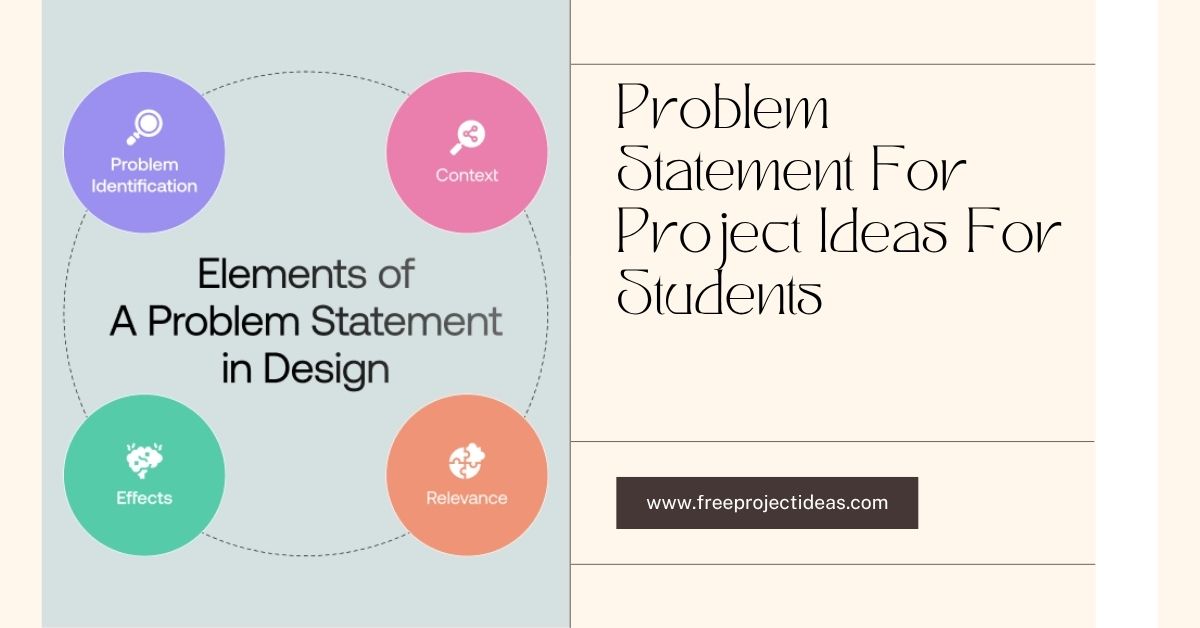
In every project, the starting point is understanding the problem you want to solve. The problem statement gives direction and purpose to your work. If you are a school or college student searching for the best Problem Statement for Project Ideas for Students, this blog will guide you perfectly. These statements help you identify real issues faced in daily life, education, environment, and technology. By clearly writing a strong problem statement, you can create meaningful and practical projects.
Here, you will find 215 unique problem statements for project ideas to inspire your next innovative creation and help you design a successful project.
What Is Problem Statement For Project Ideas For Students
A problem statement is a short description of an issue that needs to be solved. It explains what is wrong, why it matters, and who is affected by it. For students, writing a problem statement is the first step in planning any project. It helps identify the goal and sets a clear path toward finding a solution.
In simple words, a problem statement for project ideas for students defines the topic they want to work on and explains the reason behind choosing that topic. For example, instead of just saying “water wastage,” a better problem statement would be, “Many homes waste large amounts of water due to leaking taps and lack of awareness; this project aims to create a system to detect and reduce leaks.”
A clear and focused problem statement makes the project strong, meaningful, and more likely to be appreciated by teachers, judges, and others.
Also read: Innovative Inspire Award Manak Ideas
Best 211+ Problem Statement For Project Ideas For Students
- Many students forget to switch off lights and fans after class, wasting electricity.
- Large amounts of water are wasted due to leaking taps at home.
- Road accidents increase due to poor street lighting at night.
- Plastic waste is polluting nearby water bodies and soil.
- Lack of proper garbage segregation causes unhygienic surroundings.
- Many farmers face loss due to irregular rainfall.
- Students often lose stationery items like pens and scales.
- Traffic congestion causes delays and pollution in cities.
- Improper waste management causes diseases.
- Many people forget to take medicines on time.
- Overuse of plastic bottles harms the environment.
- Students find difficulty managing time for studies and fun.
- Food waste happens due to poor storage.
- People forget to water indoor plants.
- Farmers face difficulty monitoring soil moisture.
- Students find online learning distracting.
- People waste energy by overcharging phones.
- Lack of awareness about waste recycling.
- Poor waste disposal leads to street littering.
- Students often misplace important assignments.
- Floods cause property damage in villages.
- Household fires occur due to gas leakage.
- Pedestrians face risk due to lack of zebra crossings.
- Many homes face shortage of clean drinking water.
- Overuse of paper increases deforestation.
- People face trouble managing household budgets.
- Farmers lack modern farming tools.
- Schools lack smart attendance systems.
- Rainwater is not properly stored for reuse.
- Bus timings are not properly tracked by students.
- Temperature control in classrooms is difficult.
- Waste clothes are not recycled properly.
- Children use unsafe toys that break easily.
- Many villages face power cuts.
- Poor drainage causes mosquito breeding.
- Vehicles emit harmful gases causing pollution.
- People forget appointments and tasks.
- Students struggle to stay organized with study materials.
- Garbage collection is irregular in small towns.
- Elderly people face difficulty remembering to drink water.
- Roadside vendors need better waste disposal methods.
- Plastic bags are still used widely despite bans.
- Farmers face crop diseases due to pests.
- Poor storage of grains leads to wastage.
- Commuters suffer during rains due to lack of shelter.
- People find difficulty locating nearby recycling centers.
- Students need motivation to study daily.
- People lack awareness of first aid measures.
- Schools generate too much plastic waste.
- Poor maintenance of school washrooms.
- Rural students face power shortage while studying.
- Parents forget vaccination dates for children.
- Water scarcity in summer seasons affects daily life.
- Students don’t get enough physical exercise.
- Lack of affordable sanitary pads for girls.
- People forget to switch off gas stoves.
- Food stalls often waste water unnecessarily.
- Unused land in schools remains unproductive.
- Stray animal waste spreads infection.
- Hospitals waste energy and water daily.
- School toilets lack proper hygiene.
- Students throw away plastic wrappers carelessly.
- Lack of awareness about e-waste recycling.
- Old people face difficulty walking alone.
- Children are unaware of disaster management.
- Many students struggle to manage exam stress.
- Overflowing dustbins in public places.
- Roof rainwater is wasted.
- Lack of hand sanitizer awareness in rural areas.
- People forget login passwords frequently.
- Street dogs often lack food and care.
- Inefficient public transport leads to time loss.
- Food stalls generate a lot of plastic waste.
- Rural areas face poor waste disposal.
- Students waste time searching for books.
- Air conditioners consume excessive power.
- Students skip meals due to poor time planning.
- Tap water is sometimes contaminated.
- Road potholes cause vehicle damage.
- Children spend too much time on mobile phones.
- Lack of clean playgrounds in cities.
- Few schools practice rainwater harvesting.
- Improper labeling on food items confuses consumers.
- People throw garbage near rivers.
- School notes are often lost or damaged.
- Library space is underutilized.
- No proper awareness of renewable energy use.
- Students dry clothes indoors without ventilation.
- Teachers spend time marking attendance manually.
- High classroom noise affects learning.
- Students need eco friendly school materials.
- Public parks lack seating arrangements.
- Many people discard batteries with other waste.
- Households waste energy with old appliances.
- People forget to pay bills on time.
- House roof heat increases room temperature.
- Street lights stay on even in sunlight.
- People don’t recycle plastic bottles.
- Unused papers increase waste in schools.
- Students fail to manage study breaks.
- Many small shops still use plastic packing.
- Farmers struggle with irrigation inequality.
- Students skip breakfast often.
- Too many unused apps drain mobile battery.
- Public toilets are often unclean.
- Students misuse clean water in schools.
- People throw food waste on streets.
- Rural homes lack proper bathrooms.
- Dirty school uniforms cause infections.
- Noise pollution from roads affects residents.
- Waste cooking oil is not reused safely.
- Students forget homework submissions.
- Poor indoor lighting affects eyesight.
- People lack awareness about compost making.
- No proper system for collecting old books.
- People forget dustbins are full.
- Children use non-biodegradable toys.
- Plastic straw usage continues.
- Many public taps remain leaking.
- Students need clean drinking water in schools.
- School canteens use excessive polythene.
- Students play less outdoor games due to gadgets.
- Households waste rainwater.
- Farmers burn crop residue causing pollution.
- Low cost water filter idea for villages.
- People face problem separating dry and wet waste.
- Lack of affordable electric transport.
- Excessive use of chemical fertilizers.
- Rural students lack access to the internet.
- Food vendors use plastic utensils.
- Schools waste paper for announcements.
- No shade for students waiting for buses.
- Students forget to submit fee forms.
- People use more water in washing clothes.
- Waste cooking oil clogs drainage.
- Stray dogs spread garbage near bins.
- Low awareness about solar lighting.
- People keep taps running while brushing.
- Vegetable vendors use plastic packing.
- Improper use of LED lights in schools.
- Dust accumulation reduces fan efficiency.
- Poor lighting in rural classrooms.
- Cattle waste not utilized as compost.
- Improper methods of storing vegetables.
- People forget to plant trees.
- Classroom temperature is hard to control.
- Teachers need better communication tools.
- Students find science experiments costly.
- People don’t reuse plastic bottles.
- Everyone faces parking space shortage.
- Schools lack dustbins in each classroom.
- Food vendors pour water waste on roads.
- Carpooling is not practiced by students.
- Rural homes lack power backup.
- People travel far for clean drinking water.
- Hospitals lack digital record systems.
- Public gardens have unclean toilets.
- Farmers face pest attacks.
- WiFi range is poor in rural schools.
- Drains overflow during heavy rain.
- Students mix reusable and non-reusable waste.
- No proper labeling on recycling bins.
- Students eat junk food due to easy access.
- Teachers lack eco-friendly teaching tools.
- School buses cause air pollution.
- People don’t segregate bio waste.
- Too many plastic pens used daily.
- Old books are thrown instead of reused.
- Recycling bins are insufficient in playgrounds.
- Students face stress because of exams.
- School corridors lack proper ventilation.
- Rainwater pipelines are blocked.
- Canteens waste usable food.
- Heat inside buses during summer is high.
- Water coolers not maintained regularly.
- Students keep lights on in daylight.
- People are unaware of composting benefits.
- Unsafe toys contain harmful colors.
- Science model materials are costly.
- Overuse of detergent pollutes water.
- School gardens lack maintenance.
- Vehicles parked carelessly near schools.
- Broken benches in classrooms.
- Teachers use more paper for notes.
- Rural students walk long distances to school.
- Lack of safety measures in labs.
- People throw masks on roads.
- Students forget lunchboxes in schools.
- Communities lack recycling programs.
- School canteens waste drinking water.
- Heavy school bags hurt students’ backs.
- No water-saving sensors in bathrooms.
- Loud classroom noise disturbs learning.
- Many homes lack compost bins.
- Students forget exam schedules.
- Non-recyclable materials used in crafts.
- Electricity loss due to damaged wiring.
- Students don’t turn off fans during recess.
- Poor drainage near playgrounds.
- Teachers use chalk dust, causing breathing issues.
- School buses often delay time.
- Solar panels not used in schools.
- Science projects use unsustainable materials.
- People don’t practice rainwater storage.
- Old computers consume high power.
- Students lack knowledge about green energy.
- Urban trees are cut for parking spaces.
- Incomplete knowledge about recycling.
- Awareness about climate change is low.
- Air around playgrounds is dusty.
- Home gardens are shrinking.
- Late waste collection by authorities.
- Unsafe electrical appliances at home.
- Teachers often misplace attendance registers.
- Lack of simple online waste reporting systems.
How To Write An Effective Problem Statement
To write a good problem statement for a project, first observe a common problem around you. Then explain it in one or two sentences. A good problem statement answers three key questions:
- What is the problem?
- Who is affected by it?
- Why is it important to solve?
Keep the statement short, clear, and meaningful. Do not suggest a solution here—focus only on describing the issue. Later, in your project, you can develop a solution based on this problem. Always remember that a strong problem statement shows understanding, awareness, and purpose.
Conclusion
Problem Statement for Project Ideas for Students is an important step that brings clarity and focus to any project. It helps students identify issues that affect daily life and develop skills to solve them. The 215 problem statements shared here can guide school and college students to think creatively and make practical projects that have real-world value. Whether the topic is about the environment, energy saving, or improving school facilities, every small idea can make a big change. Start with a problem, research deeply, and shape it into a great project that makes a difference.