
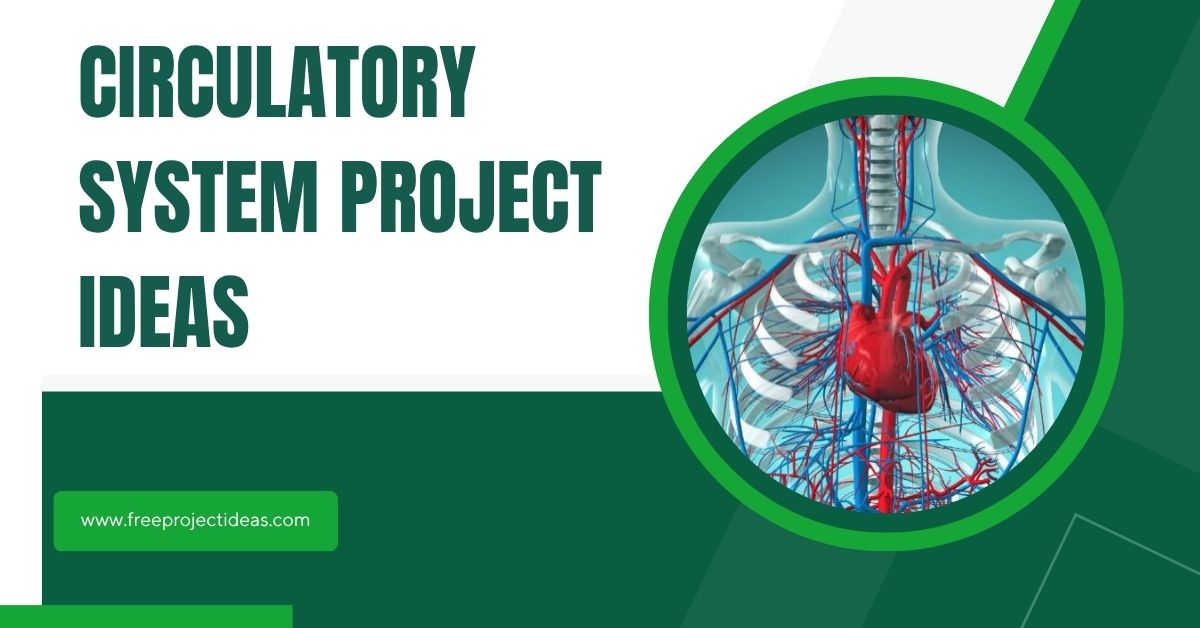
Understanding how our heart and blood vessels work is vital for students learning about the human body. If you’re looking for creative ways to explore this topic, circulatory system project ideas can help make learning fun and memorable. These projects allow kids and students of all ages to discover how blood flows, how the heart works, and why circulation matters for our health.
In this blog, you will find 50 simple and engaging circulatory system project ideas explained in easy language, perfect for classrooms or home activities.
What Are Circulatory System Project Ideas?
Circulatory system project ideas are creative and educational activities that help students visualize and understand the human circulatory system. These projects may involve crafting models of the heart, showing how blood flows through veins and arteries, demonstrating oxygen exchange, and explaining how the body transports nutrients and removes waste. Projects range from posters and 3D models to experiments and games. These hands-on projects deepen students’ understanding of how crucial their circulatory system is to life and health.
Also read: EMC Project Ideas
50 Circulatory System Project Ideas
- Create a 3D model of the human heart using clay.
- Make a poster showing blood flow through the heart.
- Build a working heart pump model using balloons.
- Demonstrate oxygen and carbon dioxide exchange with balloons.
- Craft a paper plate model of arteries and veins.
- Color-code a circulatory system diagram with markers.
- Use red and blue yarn to represent oxygenated and deoxygenated blood.
- Draw a step-by-step flowchart of blood circulation.
- Simulate pulse rate with a simple elastic band model.
- Create a clay replica showing heart valves.
- Build a wearable model showing where major blood vessels run.
- Make a flip book showing the heart beating.
- Use straws to model arteries and veins branching.
- Create a poster about the importance of a healthy heart.
- Make a model of red blood cells using small balls.
- Demonstrate blood flow with colored water in plastic tubes.
- Paint a human torso showing the heart and major vessels.
- Design a digital slideshow explaining circulation.
- Create a tactile project with different textures to represent blood.
- Build a motor-powered pump to mimic heart function.
- Show how exercise affects heart rate with a graph.
- Make a game where players move “blood” through the body.
- Create a blood transfusion awareness poster.
- Craft a diagram of the lymphatic system alongside circulation.
- Use colored paper to make a branching artery tree.
- Show how smoking harms circulation using two models.
- Create a blood pressure cuff and explain its use.
- Build a model showing coronary arteries on the heart.
- Use play dough to show the layers of the heart wall.
- Make a timeline showing the discovery of the circulatory system.
- Use water pumps to show veins and arteries pumping blood.
- Design an infographic about heart disease prevention.
- Draw a healthy vs. unhealthy artery comparison.
- Create a pop-up book that explains blood flow.
- Make mini blood vessels on cardboard.
- Simulate blood clotting using glue and string.
- Build a model of a red blood cell using balloons.
- Craft a heart rate monitor using simple electronics.
- Show the journey of nutrients through the bloodstream.
- Create a storybook explaining circulation to kids.
- Make a wall chart of the human heart anatomy.
- Craft a mobile showing parts of the circulatory system.
- Use pipe cleaners to model veins and arteries.
- Create a “heartbeat” sound rhythm exercise.
- Make a stethoscope craft with paper cups.
- Design a safe heart health awareness wristband.
- Build a simple blood flow maze game.
- Paint the heart’s chambers and label each.
- Create a clay model of the vascular system.
- Draw a comic strip illustrating a heart attack story.
Tips for Making the Best Circulatory System Project
Creating a successful circulatory system project takes a bit of planning and creativity. First, using bright and distinct colors for different parts of the circulatory system helps make your project clear and easy to understand. For example, use red to represent oxygen-rich blood and blue for oxygen-poor blood, so viewers can quickly grasp the flow of circulation. Incorporating hands-on models such as clay hearts or pipe cleaners shaped like blood vessels allows others to visualize how the heart pumps blood through the body. Combining artistic elements with scientific facts boosts both learning and creativity. It’s important to ensure safety during experiments, especially when working with sharp objects or small materials. Additionally, try to use recyclable or environmentally friendly materials to make your project sustainable. These tips make your circulatory system project not only accurate but also engaging and fun.
Why Study the Circulatory System?
The circulatory system is one of the most vital systems in our body because it is responsible for transporting oxygen, nutrients, and hormones to every cell while removing waste products like carbon dioxide. Without this continuous flow, our body’s cells would not survive or function properly. Studying the circulatory system not only helps students understand how our body works but also highlights the importance of maintaining heart health through good diet, exercise, and lifestyle habits. Knowledge of this system empowers students to make healthier choices, manage stress, and appreciate the effects of activities like smoking or inactivity on heart function. Furthermore, learning about the circulatory system is fascinating and inspires interest in medicine, biology, and science careers. Overall, it teaches how interconnected and complex our bodies are, promoting both curiosity and responsibility toward health.
Conclusion
Circulatory system project ideas provide exciting ways to learn about our body’s life-giving network. The 50 projects here are simple, fun, and educational, making complex concepts accessible for all learners. These hands-on projects engage students’ creativity and curiosity while deepening their scientific understanding. Explore these ideas to discover how the heart works, what makes blood flow, and why caring for your circulatory system is vital for a healthy life.